


Four Benefits of Strength Training to Improve Speed

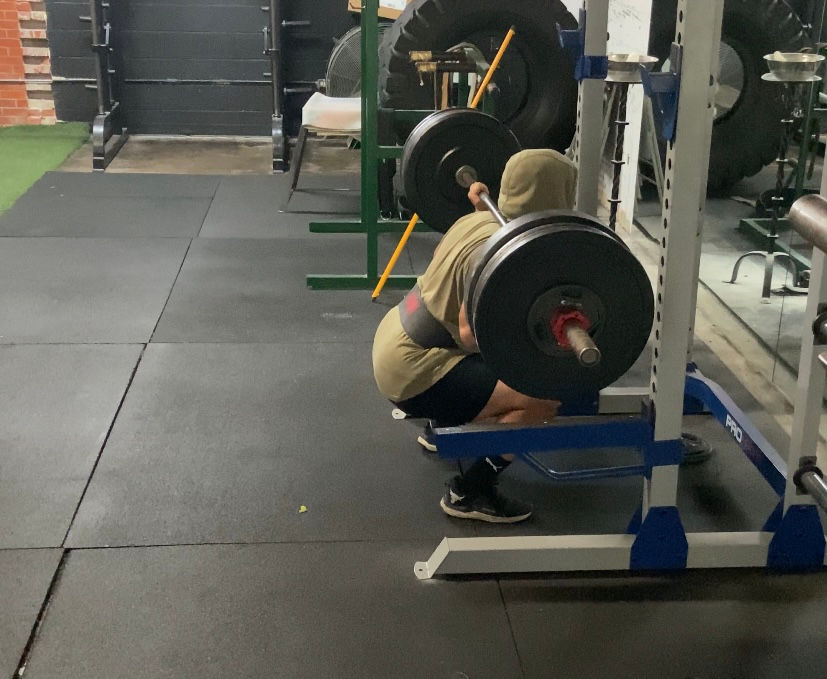
Improving speed involves a proper running technique, muscle elasticity, and strength. Research shows a strong correlation between maximal strength relative to body mass in the whole body, lower body strength training movements, and sprint times. This means that the more robust an athlete is, relative to their body weight, the faster their short sprint times will be.
Regardless of an athlete’s expertise level, executing a lift with proper form should ALWAYS be prioritized. There should be a steady increase in the weight an athlete can lift over time, while still maintaining good form. If learned incorrectly, an athlete increases the risk of injuries which can be detrimental. It can take an athlete time to break bad habits; depending on your program, you might need more time to identify and correct them. Additionally, lifting with good technique ensures that the correct muscles are being utilized and engaged, resulting in the strength gains an athlete needs to increase force production, power, speed, and overall performance in their sport.
There was a time when coaches viewed strength training as more of a hindrance than an asset, as lifting weights often caused tightness and muscle soreness, which can affect performance. However, due to the increasing competitiveness of sports, both coaches and athletes have discovered strength training can give them an advantage over their competition. Strength training has gained a fundamental tool in preparing athletes to perform more consistently.
Here are four benefits:
1. REDUCES THE RISKS OF INJURY
Let’s talk about injuries! One of the most significant benefits that strength training creates is the physical changes in the muscle, connective tissues, and bones. More specifically, the bones increase in mineral density, which means the bones become stronger over time. This is rather significant, as the body can take a beating in many sports.
Strength increase also occurs in tendons, ligaments, and muscles because they are the support system of a joint; they are the first to take the toll from the impact of force caused by blows, falls, or awkward movements. Strength training can increase these connective tissues, improving resilience and resistance to impact and injuries.
2. INCREASES POWER
Many athletes confuse “strength” and “power,” using them interchangeably to refer to the ability to move heavy things. But the truth is that they are two different things, requiring different training methods. Power is the result of speed and the ability to exert force rapidly. In other words, speed plus strength equals power. When athletes add resistance training to their program, they can increase their power. More power generated in less time equals more explosivity, with quicker and more efficient movements. Furthermore, the muscles learn to synchronize, utilizing energy more efficiently and reducing waste.
You can do this by boosting the velocity of classic lifts such as the squat and deadlift, performing Olympic lifts; such as the snatch, the clean and jerk, and by including plyometrics into your routine. Do not limit your power training to your lower body; include upper-body power moves such as the clap, pushup, and rotational toss to build explosiveness from head to toe.
3. FASTER NEURO-MUSCULAR ACTIVATION
One of the most overlooked benefits of resistance training is neuromuscular activation. It is the process by which the brain sends signals to the muscle to engage muscle fibers and activation patterns to perform a particular movement. The muscle reacts and sends feedback to the brain, creating a loop, allowing the body to learn to optimize and improve movements over time.
Resistance training improves not only the speed of the signal that is sent from the brain to the muscles but also the quality of the signal, which can determine the optimal amount of force needed for a given movement.
4. BETTER BODY COMPOSITION
Body fat can limit endurance, balance, coordination, and movement capacity. The joint range of motion can be negatively affected by excessive body mass and fat, which can form a physical obstacle in joint movement and limit the range of motion. Lean Body Mass enables an athlete to generate more force quickly and contributes to their speed, power, and agility performance. Lastly, better body composition can also boost athletes’ self-esteem and confidence in their performance.
In conclusion, there are many benefits to strength training for athletes, regardless of their sport or expertise level. This is an excellent tool for athletes wanting to reach the next level, and who are looking to improve their physique, resilience, and their performance.

Comments